"I confess I could not follow him clearly. He seems deeply interested in Church matters. Are you quite sure he is right in the head? I have noticed again and again since I have been in the Church that lay interest in ecclesiastical matters is often a prelude to insanity."
– The Vicar, Decline and Fall
I
I received a message from Christie. The months since his return from Newlyn had been spent trying to assimilate the interviews and archival material he had amassed during the field work, and all while continuing to suffer from his ongoing ailment, now entering its ninth month of discomfort and fractured sleep. It should have been short-lived, but the most effective treatment was currently unavailable in the UK, and so he was left weathering the compounded side-effects from a succession of ersatz prescriptions from the GP. There had been a transitory period of a few weeks which hinted at success, with the task then being to remedy the damage the treatment(s) had wrought on his skin. But I remember Christie wasn't convinced, and indeed there was an importunate relapse before the month was out – much to the disbelief of the pharmacist. A specialist referral was in the works but the timeline protracted: over a year. The epiphenomenal symptoms greatly complicated the situation too, and it was difficult to disentangle the physical from the psychosomatic, such as the phantom itches I'd noted with increasing frequency during our meetings. Now, his housemates thought they had caught it too.
He asked if I would accompany him to a Welsh holy well – in jest, I assumed at first, although the question I think betrayed an understandable exasperation at his ongoing predicament. I assented with an alacrity which, in hindsight, is hard to rationalise. There were no considerations of the practicalities, but I was eager to visit Wales again after a few years, irrespective of this journey's curative intentions.
First, we would need to identify suitable wells. Consulting the online library catalogue, we found most of the limited, and arcane, publications of interest were held in storage – these would need to be requested. The ongoing after-effects of the ransomware attack on the British Library didn't help matters either, with many electronic deposits unavailable. A few pages through the results we settled on The Holy Wells of Wales by Francis Jones (University of Wales, 1954). This was surely ideal for our purposes anyway, and available immediately, so we set out amongst the shelves, eventually finding the slender tome tucked away at the other end of the (long) corridor from its expected location.
Skimming through the pages, the book was clearly of relevance; an attempted taxonomy of the Holy Wells in Wales, with each ffynnon – this translates as fountain but was used interchangeably with well throughout – sorted first by location and then category, in what we imagined had been a fastidious endeavour quietly undertaken in a nook of the National Library of Aberystwyth at which Jones had been based. The categories were as follows: Class A = wells bearing the names of saints; Class B = wells associated with churches, chapels, feasts, and pilgrimages; Class C (the most convoluted) = wells which, in early literature or in surviving tradition, are reputed to have been healing wells, and whose names are not associated with those of saints as in Class A, and which are not as closely or obviously connected with churches as those in Class B; Class D = wells named, apparently, after secular people (although Jones allows for the possibility of these names being local or minor saints); Class E = miscellaneous. Preceding the lists, Jones provided a history of well worship in Antiquity, Medieval, and Post-Medieval Wales, followed by a discussion of the associated beliefs and rituals. We scanned through the indexed wells under Class C in search of a mention of skin conditions – most were for agues (tertian or otherwise), consumption, rheumatism, scrofula, or, most frequently of all, sore eyes. The entries were for the most part terse and functional:
Caernarvonshire, Class C, Ff. Nantcall – in Clynnog parish: cured melancholy, indigestion, etc.
Seemingly the other curable ailments were self-evident from that preceding two-membered list. Other descriptions were more developed:
Carmarthenshire, Class C, Ff. Nathan – on the top of a hill near Duke's bottom, Laugharne, are three wells, called Ff. Nathan from the name of the owner: one cured weak and inflamed eyes, the second rheumatism, the third wounds. To cure rheumatism the water was mixed with clay and applied to the affected part. During the latter part of the 17th century, a Scots doctor enclosed these wells – M. Curtis Antiquities of Laugharne (1880, 2nd Ed.).
In other instances, however, Jones seemed inconsistent in his coverage of sites. In Chapter V (Belief and Ritual), a passage describes in some detail the healing powers of Marcross Well in Glamorgan, even reproducing an associated doggerel:
For the itch and the stitch,
Rheumatic and the gout,
If the Devil isn't in you,
The Well will take them out.
The well was also the last (or first) resort of bald Welshmen, owing to its reputed ability to restore hair; the index list covering Glamorgan then makes no mention of Marcross. Elsewhere, Jones seemed unsure of the scant information on which to base the entries, or his unresolved notes-to-self had slipped through the editing process:
Glamorgan, Class B, Scraddock's Well – in Cheriton parish, where there is also a Scraddock's Gutter?
This was hardly encouraging. Nevertheless, The Holy Wells of Wales was favourably, if limitedly, received at the time of its publication; the sole published review by R.S. Loomis (in Midwest Folklore 6(3) 1956 – two years after original publication of Jones's book) praised the scope of the study, and encouraged an expanded second edition. This would never materialise. The book assimilated large amounts of archival material, often presented in wholly untranslated sections of Medieval Welsh – presumably Jones understood what he was transcribing. So dense was the research that Christie and I were unsure if he had found time to visit any of wells described therein; indeed, the entries seldom gave any information about the condition or accessibility of the wells at the time of his writing. Accounting then for the seventy years since the original publication, over which I assumed any funding for upkeep would surely have been minimal, our idea to take the word of Jones as the basis for the trip did appear somewhat ill-advised. Faute de mieux, we continued searching through for wells pertinent to our line of inquiry for disorders of a cutaneous nature, eventually finding two entries:
Caernarvonshire, Class A, Ff. Aelrhiw – near the church of Rhiw: it is about 10 feet square with seats around it, and was said to cure scrofulous disorders, being particularly efficacious in the cure of a skin disease called Man Aeliw (the mark or spot of Aeliw) – M. Fardd Llen Gwerin Sir Gaernarfon (1908) 185, S. Baring Gould & J. Fisher The Lives of British Saints (1913) Vol. I 113, W. Cathrall History of North Wales (1828) Vol. II 120.
Denbighshire, Class A, Ff. Ddyfnog – about 200 yards W of Llanrhaeadr-yng-Nghinmeirch parish church... much frequented for the cure of scabs and itch, and some said it cured pox... provided with all the conveniences of rooms etc. for bathing built about it – B.Willis, Survey of Bangor (1721)... arched over, from which the Water used to fall through a Pipe in the Wall, into a Bath, whose bottom was paved with Marble, with a building round it and roofed, but now exhibiting one shapeless ruin – R. Fenton, Tours in Wales 1804-1813 (1917, ed. J. Fisher).
We had our two wells. Consulting The Lives of British Saints, Aelrhiw seemed to be a compound of the location Rhiw with a Saint Aeliw, although no such saint occurs within the genealogies of Welsh saints; no luck in elucidating the aforementioned Man Aeliw condition either. There were some photos on the Megalithic Portal showing Ffynnon Aelrhiw, so we could at least be confident it had survived to the advent of digital photography, but the site did look rather overgrown, and we struggled to make out any water. As for Ffynnon Ddyfnog, it had clearly suffered severe damage in the late eighteenth century before Fenton had gotten to it, although Christie knew a friend who had bathed there, and the photos looked encouraging. Ffynnon Aelrhiw was the farthest away, towards the tip of the Llyn Peninsula in Gwynedd – with Aberdaron the nearest settlement offering more than a cluster of dwellings. We would stay there and walk to the well, taking a detour to Ffynnon Ddyfnog, near Denbigh, on our journey home.
My preference was to take public transport, although even I balked inwardly at the predicted journey duration by trains and buses: twelve hours. Christie asked if I drove, knowing full well I do, and said we should hire a van to drive and sleep in. This was an improvement upon his prior suggestion that we camp in February – an idea which I had flatly refused to entertain given our limited equipment – but having only ever driven hatchbacks (and infrequently so over the last few years) I was reluctant for my first experience of handling a more substantial vehicle to involve a large insurance excess looming over me; I steered him towards looking at smaller vehicles.
My most recent drive had been a rather aimless one to Lowestoft to kill time one miserable afternoon almost a year ago, after having attended a wake with my grandmother who lived nearby – the event itself had largely comprised a succession of conversations commending the spread the bereaved family had put on while rain lashed against the windows of the village hall. My parents had also come up for the day in the old Polo to give it a runout and were staying the night, so it was free for me to borrow for a drive after we'd left the hall. The daylight was retreating as I parked up outside Lowestoft and waited for the storm to clear before walking against the wind to Ness Point. I barely stayed five minutes looking out and back along the coastline before heading back to the car.
Thumbing through the book, while Christie went about searching for hire cars and reading online accounts that compared sleeping in a Vauxhall Corsa against a Ford Fiesta, I stumbled across an entry for Ffynnon Barruc in Glamorgan, believed to cure drunkenness – repentant sinners, driven there by remorse, were reputed to have thrown used bottles into the well before bathing. Looking Ffynnon Barruc up now, we saw it had dried up to leave only a ruinous stone wall around some sunken turf. And it was next to a primary school, inevitably conjuring the image of well-intentioned recovering alcoholics, stripped-off and hurling bottles into the ruinous well today while lunchtime monitors watch on apprehensively from behind the playground gates.
A few pages further, there was a granular account of a reputed cure for epileptic patients at Ffynnon Degla (Denbighshire):
1) He visited the Well after sunset on a Friday. 2) He washed his hands and feet in the Well. 3) He walked around the Well three times, repeating the Lord's Prayer three times, and carrying a cock in a handbasket. 4) He then pricked the cock with a pin which was thrown into the Well. 5) He gave a groat at the Well to the parish clerk. 6) He repeated (3) supra, but around Llandegla Church. 7) He entered the church and placed another groat in the Poor Box. 8) He lay under the Communion Table, with the Church Bible as a pillow and, covered by a carpet, remained there until daybreak. 9) He then placed the cock's beak into his mouth and blew into it before letting the bird go. 10) He then offered a piece of silver in the Poor Box. 11) He left the cock in the church: if it died in the church the patient would be cured. 12) He again visited the Well and repeated (3) supra.1
This all seemed a rather good earner for the church to me. In 1749, the Rural Dean made a determined effort to suppress "that superstitious practice", but in 1813 the parish sexton treated his son through the ritual, and an 1850 account described multiple cocks staggering about the church after such visitations. Jones notes in passing a similarity of the practice with a Babylonian text, before describing further cockerel-dependent rituals in Wales. At Ffynnon Gaffo (Anglesey) cocks were offered to prevent children from being peevish, but the rite was ineffective unless the priest ate the sacrifice.
By now Christie had found a few hire options for around £100, but inspection of the small-print showed the included distance was only a hundred miles – we would cover at least four times this distance for the round-trip – with thirty pence charged for each extra mile over the allotted hundred. The public transport option was more appealing again, but looking further revealed our return journey would be even more convoluted than the outgoing, with two legs of rail replacement buses to reach Birmingham from Bangor. The hire car seemed inevitable – Christie went back to searching. In the meantime, I had at least found a cheap hotel option in Aberdaron which obviated any concerns around sleep arrangements across the rear seats of a hatchback. We checked out the book and left.
1 Jones adds in a footnote the use of a small cock if treating a boy, and the substitution of the cock with a hen for a woman, or a pullet for a girl.
II
I gingerly pulled away from the hire centre. A few days prior, Christie had found a local business offering cars for hire at a decent price and had me ring up to check the mileage limit and arrange a hire of a Volkswagen Polo. The limit was 500 miles (probably about what we needed) although there was some confusion with the insurance company as my current home address differed from that on my licence. I'd grabbed a handful of official documents and hoped for the best as we headed to the forecourt. The hire company cum forecourt operator made much on the website of their wide selection of imported American food (appealing to the local US air force personnel and children, I assumed) and there were prominent signs assuring customers that their tank would be drained if they should be without the means to pay for petrol. The car collection had at least been straightforward, with just a short period on hold with the DVLA to confirm my details in the hire office, during which I'd browsed a glass cabinet of memorabilia pertaining to the deceased owner's collection of single-seater light aircraft ("Ken's Girls"), one of which had appeared in a Bond movie.
We both agreed to avoid motorways – not that it changed the duration of the journey all too markedly – taking a route via Kettering, Melton Mowbray, Uttoxeter, Stoke-on-Trent, Nantwich, Chester, and Bangor. We would stop at Melton Mowbray for lunch, and at Chester before entering Wales for the final leg to Aberdaron. I felt some mild enthusiasm at the prospect of driving again and had re-entered a habit of old in packing a bundle of CDs, only to find this 72-plate Polo equipped with just digital radio and wireless music connection – no CD player. Christie searched fruitlessly through the central display console for in-built navigation while I started towards Kettering along one of the parallel stems of the A14, distracted by the knots of slip roads and flyovers beside and astride the road; we soon gave up and connected his phone for directions.
It was over the years of my more frequent driving in late adolescence that the dance music album had become more prominent in my listening: Soft Thru, Gymnastics, and Atomic Funkster on forty-odd minute journeys along dual carriageways and B-road branch lines to and from tutoring jobs and bad suburban parties. And there was the CD of Black Secret Technology I'd played repeatedly one summer before losing it in a friend's Fiesta (I think) on a trip to Wiltshire. My journeys had never extended beyond a couple of hours, happy as I was to leave the driving to others on longer trips, and so my driving experience remained stunted, limited to occasional outings when visiting home. I still hankered after music heard in cars.
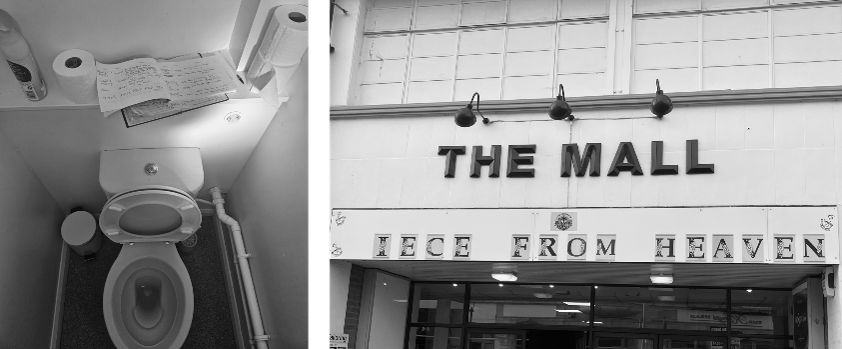
I found the drive less taxing than expected, experiencing a restricted enjoyment, and we made good progress to Melton Mowbray – the Rural Food Capital of Great Britain according to the sign upon entry. Neither of us had been before, although I had contemplated visiting while spending three dreary days at a conference in Loughborough the previous month, before opting to visit Leicester instead. Pulling up in a car park at the end of the high-street, we were both slightly perplexed. We each had a received idea of artisanal food stalls lining streets of restaurants and delicatessens; instead, we found a high-street in good health, but comprising mostly commonplace retailers and chain stores, offering little by way of independent places to eat. (The local pie shop was temporarily closed for renovation works, with a temporary outlet set up in the covered arcade.) After some aimless walking, we ducked into a small café down a side street. Christie went to the toilet and returned with a stifled smirk on his face; there was a guest book on top of the cistern. A contingent of retiree regulars sat near the counter, jocularly discussing what seemed to be plans for a new nightclub nearby, and what went on in them, while we ate generous portions of Stilton, chutney, bread, and the eponymous pie which I left for Christie. We paid and headed off towards the church, attempting to estimate its age as we approached. It had just been closed for the day as we arrived; the woman at the door apologised but went in to ask the age – the oldest portion of stonework at the base of the tower was from the twelfth century as it turned out, with most of the building from between the thirteenth and fifteenth. We ought to press on.
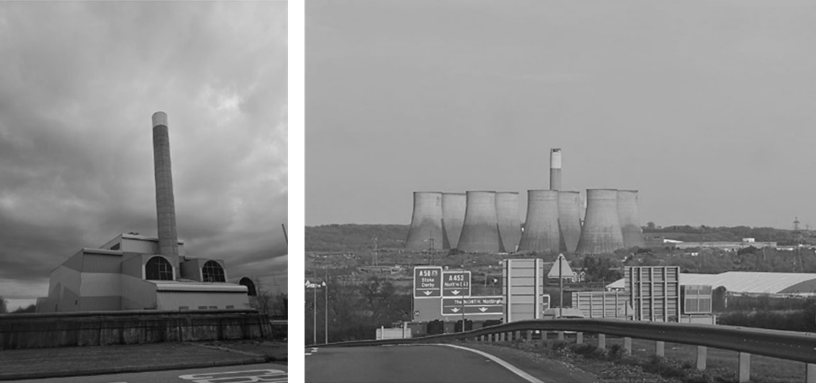
There were numerous prisons signposted on the drive – Gartree (category B), Foston Hall (closed category women's), Dovegate (category B), and Sudbury (category D) – and Christie read out some notable former inmates of each as we passed. Cooling towers at Ratcliffe and Willington became prominent features of the landscape as we neared the vicinity of Burton. Ratcliffe-on-Soar is the last remaining coal-fired plant in operation in the UK, with a 2 GW capacity, running down the last of the coal mined at the now-closed Nottinghamshire collieries, although it didn't seem to be generating any power today judging by the lack of vapour emanating from the towers. The Central Electricity Generating Board had awarded the plant a good housekeeping award in '75 and '86; after privatisation, the site had flipped between numerous owners. Having come into their portfolio, E.ON fitted solar panels to power the office block to offset plant emissions, before separating the fossil fuel assets from the mothership a few years ago to form Uniper. (The chosen name was a portmanteau of unique and performance.) The German state soon nationalised the company, socialising the decommissioning costs.
Extensive distribution warehouses ran beside the road too, one of which had dedicated buses for taking staff, no doubt called fulfilment operatives, to and from work. I also noticed frequent signs stating that the road (the A50) is maintained by Connect Roads (in collaboration with Balfour Beaty) for Highways England. We were unsure how this worked in practice: did they own the road, or were they contracted to perform maintenance in a form of public-private partnership? Taking in our insipid surroundings along the road over the last hour or so – besides a narrow and pretty church spire, the location of which I cannot recall, the only impressive architecture was the moribund cooling towers and chimneys – Christie remarked that it's a wonder people who drive frequently aren't a more radical political constituency.
I have only ever seen Stoke-on-Trent from the vantage point of the arterial A50, which seems to bisect the city, flanked on either side by steep sloping concrete walls to form a rectilinear valley, spanned periodically by ugly bridges of tubular steel, painted red and green to leave them half-resembling elongated climbing frames. The hour-long drive between Stoke and Chester was tiring drudgery – a succession of frequent roundabouts separated by stretches of a few minutes on the dual carriageway. Unnervingly, the satellite navigation appeared now to be timing its callout announcements of directions for just after I would jadedly ask aloud what we were doing at each of the by-now frequent roundabouts.
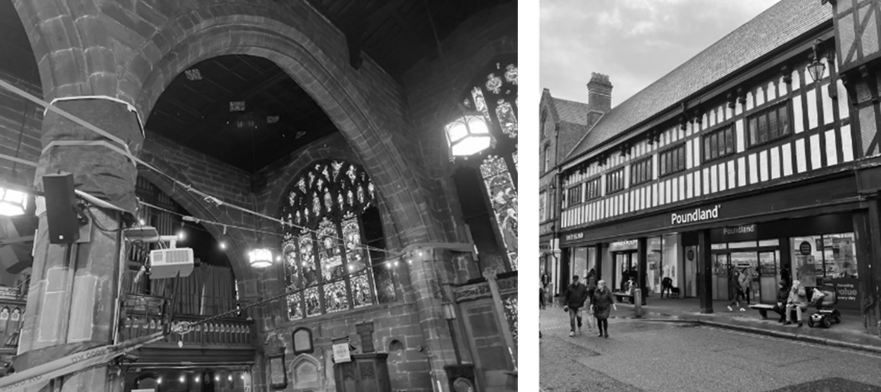
I was less enthusiastic about the decision to drive by the time we finally parked in Chester, having undertaken a few laps of the city in search of parking and driving hesitantly along the semi-pedestrianised streets. We had both heard of the Chester Rows: streets of squat shopfronts along the top of which ran a covered arcade with a second parade of shops sunken back a few metres amid an abundance of half-timbering. A multi-level city at a human scale, and with a variegation wholly wanting in similar attempts at elevated walkways in British town redevelopments to follow much later. Each shop along the arcades has its own approximately ten-square metre portion of flooring outside, meaning we walked across variations of varnished boards, checkerboard tiling, marble, and polished stone. The Cathedral was closed, and quite ugly Christie reckoned (an opinion with which I was inclined to agree looking up at the time-blackened red sandstone against the overcast sky), although Saint Peter's on Eastgate was open for a drink and prayer. The crenelated tower was once topped with a spire, later removed in the eighteenth century having been "much injured by lightning". The church was in dire need of repairs, with numerous ratchet straps wrapped between columns to support arches along either side of the nave; felt-covered display boards were propped up haphazardly to form an improvised exclusion zone. Fissures in the brickwork were obvious. They needed £80,000. Briefly surveying the notice boards and exhibitions, the church was clearly significant in the community, with a surprising number of people of all ages here for tea on a Thursday mid-afternoon. We both hoped to stay longer but knew we ought to be moving on the late afternoon light was taking on a dark blue hue. There was also the matter of our parking ticket expiry. We started back towards the car, although Christie thought to duck into an outdoors shop on the off-chance they had some walking boots in size fourteen. (He had left all his equipment back in Cornwall.) He went to the counter to ask, and the woman went off to search the entire stockroom. I decided to go take the Polo out of the car park. Christie met me down a side-street twenty or so minutes later; he'd bought a pair of boots (not without also having to take out a membership for the store and subscription to their monthly magazine) and grabbed a map for the Llyn Peninsula. Taken as I was with the Rows, I still only took one photo on our walk on the streets outside the Church.
We joined the A55 (the Welsh Galactic Superhighway, Christie informed me – in fact, the North Wales Expressway) for our passage though the Border Country, envisaging we'd arrive in a couple of hours, not long after sunset. As we reached Abergele and Colwyn Bay the road began to hug the North Welsh coastline, Liverpool Bay extended out to our right, with jetties and disused piers reaching out for a hundred yards or so. The road made its way through rock faces, the two anti-parallel streams of traffic passing through separate tunnels, the off-white lighting and engine noise ricocheting from the rounded concrete wall sections; I felt abroad in Britain and sunk back in the seat as the Polo crept over seventy. Earlier in the drive, I'd mentioned my spending the previous week revisiting a load of twee, soft-lad indie sevens; Blueboy, The Pastels, and a succession of bands in the Australian milieu now played as we made our way along the coastline past Bangor. We turned off onto B-roads at Llanaelhaearn as the sun finished setting. I felt we'd arrive soon.
It proved a monotonous final two hours. A dense fog rolled over the road, and the contours of our surroundings disappeared, reducing my field of vision to 10 yards or so of undulating single-track roads walled with gorse. I drove slowly, lingering slightly near each passing point in anticipation of oncoming traffic, the fog dissipating and returning as our elevation changed along the way. Eventually, we arrived at our final turning onto the road down into Aberdaron, only to meet a sign stating the road was closed, and we pulled over to work out a plan; mercifully, a highway operative arrived minutes later to clear the signs and reopen the road, greeting us in Welsh after I wound down the window to ask for directions.
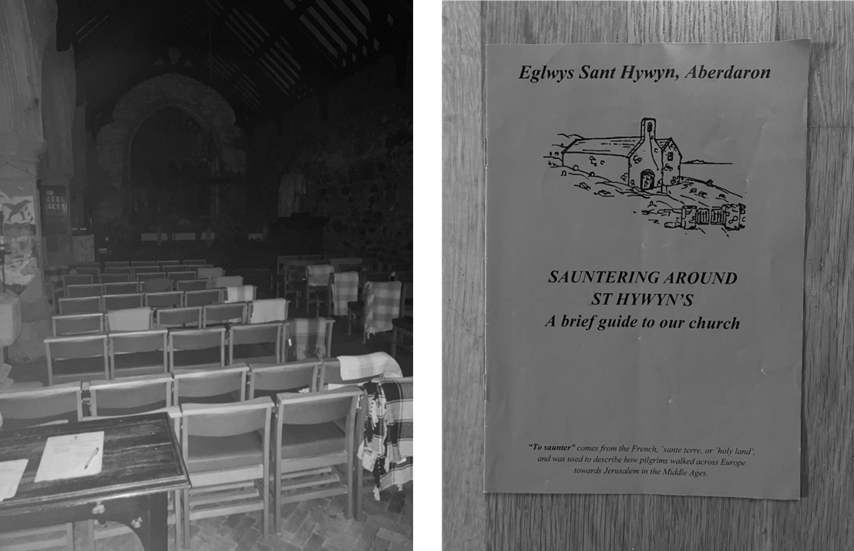
I parked up outside Gwesty Tŷ Newydd in Aberdaron around half-past seven, close to ten hours since our departure. The hotel had rung in the week and asked if we wanted to book a table for dinner; I had opted for quarter to eight, and we saw our table-for-two made up in the dining room. We finished eating within an hour, then headed out to see the village by night, finding the door was open to Saint Hywyn's Church. All the lights were out, neither of us could find the switch, and I felt slightly that we were trespassing, although Christie was comfortable enough sauntering over to the upright piano (with an overly bright timbre, he remarked). Searching around by torchlight, I saw the Church made much of their former vicar R.S. Thomas (1913-2000), with selections of his poetry available for sale in the well-maintained shop in an alcove to the left of the church entrance. The north aisle dated from the twelfth century, proving Christie right – I had guessed sixteenth century for consecration, which did at least tally with the south aisle's date of construction. Christie also thought the roof to be a recent addition, which scanning of the boards showed to be a correct assertion.
Along the drive, we had jokingly wondered how the hotel proprietors would interpret the arrival of two young men so far out of season, and on returning to the room we realised they had made up just one double bed in the twin-room I had booked – it was actually a family room with unmade bunkbeds in the adjoining room. I went down to the reception, who happily provided some alternate bed linen for one of the bunks that I could sleep in. Owing to the primary curative purpose of our trip, sharing linen and towels seemed unwise. We turned in for the night and I unpacked from my rucksack the clothes and books I had brought.
I have a habit of saving books to be read when approximately – often very approximately – in the locations of their setting or subject matter, which has functioned neatly as both a motivation for their acquisition and then a convenient excuse for having not gotten around to reading them. This time it was Views Beyond the Border Country – Raymond Williams and Cultural Politics (eds. D. Dworkin & L. Roman, Routledge, 2003), which had only languished on the shelf at home for a year or so before now. The initial essays mostly rehashed old ground, expounding the criticism Williams developed across Culture and Society and The Long Revolution. Jon Thompson assumed a more critical stance, arguing that Williams, often contrasted against F.R. Leavis's dogmatic reverence for moral seriousness, had merely propounded his own alternative Great Tradition, made worse by Williams's persistent neglect of female authors – see The English Novel from Dickens to Lawrence. Nothing on John Gross's vituperative, and ultimately nonsensical, attack on Williams as having been "frightened by Lawrence and Eliot in his pram" (New Statesman 4 May 1962), but still it was commentary such as Thompson's – i.e. the association with Leavis as pejorative – which had motivated Garry Watson to write at length on Leavis as the "absent centre" (reappropriating Perry Anderson's phrase) of a literary establishment which had, to his mind, superciliously dismissed Leavism while remaining timorous in the face of its analyses. I subsequently read Watson's polemical and amusing monograph: The Leavises, the "Social" and the Left (Brynmill, 1977). His central claim is a bold one.
Many of the weaknesses of contemporary English culture – a great deal of shoddy thinking and a general failure of nerve – are traceable to a widespread and continuing failure to confront the Leavises.
A touch sensationalist. But among this wasteland of pusillanimity, Watson asserts it was Raymond Williams who had "come closer than most" to tackling the challenges posed by F.R. Leavis (and no less stridently by his wife Q.D. too). However, Watson's charge was that he did so only "obliquely" and without due care.
Without consciously intending it, he has helped to generate the illusion that it is possible to bypass the Leavises; that the positive aspects have been taken and absorbed in his own work... The trouble with Raymond Williams is that he uses his considerable influence to urge others to go beyond something that he, himself, has not fully understood. Instead of helping to clarify the issues, he blurs them.
I struggle to see what Watson wanted of Williams, who himself regularly described the relationship of his work with the Leavises (F.R. and Q.D.) – even writing an obituary for his former Cambridge contemporary as a man "seized, always, with especially strong feelings of continuity, of commitment, of the everyday substance of English provincial life." (Watson ignores too the obvious kinship between Leavis and Williams in their conviction to undertake criticism as a cultural intervention.) Watson's insistence was that the Leavises be treated as a totalising, all-encompassing, critical force, and it was in adherence to this belief that I suspect he found Williams wanting.
It is an illusion to believe that one can take seriously their criticism of, say, D.H. Lawrence or Jane Austen while ignoring their criticism of this system.
An assertion at which I demur: its necessity is never explained. But even granting Watson the benefit of the doubt on this point, he massively over-corrected (even tacitly admitting so in his preface); his interest ultimately lies in this system, above all else. Whole swathes, chapters, were devoted to extracting remarks by Kermode2, Eagleton et al. as evidence of calumny against F.R.L. – to the detriment of any broader argument Watson was trying to outline. Indeed, close to half a century since Watson's intervention on the need to accept the totality of their work, a revival of interest in Leavism (if there is to be one at all) should surely come from revisiting the particularity of their reading and criticism – the sense of a reader's response – an outlook summarised in English Literature in Our Time and The University (F.R. Leavis, Chatto, 1969):
every work that makes itself felt as a challenge evokes, or generates, in the critic a fresh realisation of the grounds and nature of judgement. A truly great work is realised to be that because it so decisively modifies – alters – the sense of value and significance that judges.
I dwelt longest in Views Beyond the Border Country on a piece by Laura Di Michele discussing the autobiographical novel from which the collection of essays drew its name: Border Country. The book traces Williams's uneasiness as the Welsh boy who received an English education; his looking from there and here across at two existences. The border was, in mind as in practice, uneven. Williams described the sense in which those from the border country could view as foreigners both the English and the Welsh-speaking Welsh of my current location. At dinner, Christie and I were both naively impressed at the ease with which the travelling church party sat to our left (a group of 10 who seemed to be the only other guests) switched between Welsh and English language in conversation. The vitality of the native language – the sound of pleasingly soft consonants – was stimulating his Cornish nationalist tendencies, admittedly mild though they are. At dinner, we had discussed the depression Williams had entered after undertaking an extensive interview excavating his life and work with the New Left Review. He himself lamented the paining revision and exactness the process had demanded, described in letters sent from the cottage bought near his birthplace in Monmouthshire at which he recuperated, pottering in the garden with his wife, unable to divert his scattered attention(s) elsewhere.
2 Reviewing Ian MacKillop's F.R. Leavis: A Life in Criticism (Allen Lane, 1995), Kermode noted with some dissapointment: "MacKillop, I'm afraid, misrepresents me...I am held responsible for the rejection by Cambridge University Press of a book about the Leavises by one Garry Watson. I do not know this book and cannot say whether I 'received thorough criticism' in it, as MacKillop asserts... Incidentally, the book was turned down by another Leavis pupil, D.J. Enright, at Chatto; perhaps I should add that he had no occasion to consult my feelings" (London Review of Books 17(16) 1995).
III
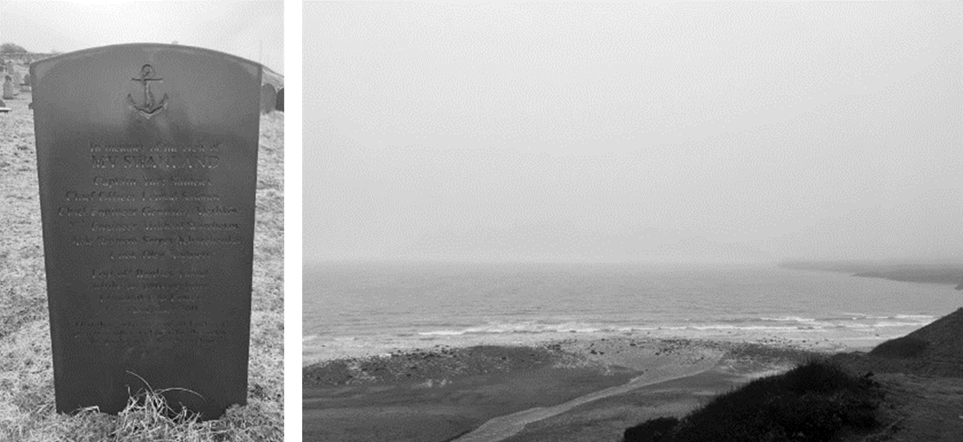
Breakfast was ordered through an anachronistic process: a sheet of paper on the table we dined at the night before gave an itemised list of the options, and we placed a tally with a blunt pencil against those we wanted. I had been for a short walk beforehand, while Christie worked on some writing back in the room. I was wholly alone wandering along the beach, remembering that I had absconded from work for the trip. A stream ran down the valley into Aberdaron, gaining momentum and flowing quite forcefully beneath the small stone bridge at the centre of the village before forming a channel through the beach to meet the gently lapping waves. Walking up from the beach and then through the church cemetery, I saw quite obviously by daylight that the church roof was indeed a recent addition. One headstone in black stood out to me, commemorating the six crew members lost in the 2011 foundering of the MV Swanland. The small and hard-worked cargo ship, registered in the Cook Islands, had carried a variety of unglamorous dry bulk cargoes around the UK coastline across its later life – the accident report stated it was "not unreasonable to suggest her trade was at the lower end of the solid bulk cargo market". The Swanland sunk 17 minutes into a journey from Llanddulas to Cowes on the Isle of Wight, carrying a 2,700-tonne payload of limestone that had been loaded as one massive deposit in the central section of the hold. The resultant stresses on the 34-year-old hull, which over its life had undergone numerous piecemeal repairs and modifications (with which the investigators did not find fault), were excessive; in striking a large wave forward, the hatch covers were bent upward, and the bulwark buckled outward at its middle on the starboard side. A Mayday call was raised at 02:01, and a laboured attempt made to turn back to port, so the waves would break over the stern instead. The damage seemed to worsen and preparations for an evacuation were made. There were just six immersion suits between the eight Russian crew members; only two of them would survive. When younger, I had developed a peculiar and morbid interest in accident reports. At the time I had been impressed by the extent of these documents – returning to them now, I am often surprised at the rather shoddy presentation of figures and tables.
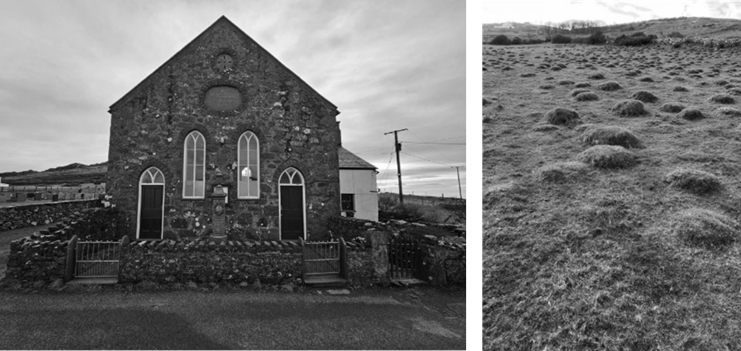
We left for the walk soon after breakfast, having briefly planned out a route on the Ordinance Survey map bought in Chester. At first, we had some difficulty locating the path that was supposed to follow the stream up through the valley, eventually finding our way and making steady progress before encountering some difficulty as cows began following us, at increasing speed, up a boggy path. We reached Porth Ysgo at around midday and descended the steps down to the foot of the waterfall as the sun came out. I ambled aimlessly for ten or so minutes in the cove while Christie took some photos before pressing on. Twenty or so minutes further along the coast path, we came across a man perched near a fence post, eating sandwiches from a plastic bag formerly housing a pre-sliced loaf. He was over from Cheshire with his wife who was "off somewhere over there" (gesturing vaguely behind himself). He asked where we were going and was amused by our response. He knew nothing of holy wells, but confidently gave us some confusing directions to Rhiw and told us the name meant Sex. (Looking this up subsequently, I see Rhiw translates as Hill.) We became lost for a while in attempting to join the path, following a track which led only to a steep drop, and could see the man a few hundred metres away – now above us – pointing amusedly up the hill. I think he thought us slightly daft. We traced our steps and came across what could scarcely be described as a path, running waywardly up through a valley besides a clumsily erected wire fence. Eventually this route took us back to following more recognisable paths, although many of the stiles had been boarded in a way that made climbing over difficult – the act of a bellicose farmer during the pandemic, Christie reckoned. We reached Rhiw, which comprised about two-dozen dwellings atop a hill. The chapel caught our attention, and we wondered about the reason for the two doors which lent the small building an oddly magnetic symmetry. One for men and the other for women? Christie then suggested (probably correctly) that, so little did the building extend back from the road, the rows of pews must run right to its rear. To seat the entire congregation, it would make sense that each door fed one of the two aisles. We presumed this was for the Methodists – it transpired subsequently to be an Independent Nonconformist chapel – whereas the Anglican church, mentioned in Jone's account, was the one situated near Ffynnon Aelrhiw.
We turned off down a track at a corner in the road for the final leg of our journey, with what appeared to be a church visible a kilometre away. We arrived to find the cemetery intact, although the church had been converted into a holiday property. No sign of the well. Ffynnon Aelrhiw was written on the map in a Celtic font, the size of which made the marking considerably out-of-scale with the actual size of the well amongst this surrounding landscape, such that discerning its precise location was near-impossible – we would be left undertaking the final search reliant only on instinct, and luck. We walked to the bottom of the cemetery and out of the white painted iron gate into the road which curved down, around, and up the former churchyard, coming across two ramblers who saw us clambering over a metal gate into one of the fields. Stopping for a brief chat, they were in equal parts amused and confused at hearing both our purpose and how long it had taken us to this point. Christie mentioned our having not packed any lunch – he was hungry by this point in the afternoon – to which one replied she would have offered us some of their food if they hadn't already eaten it, while the other pulled out a copy of their mapped itinerary upon which she saw no well. They wished us good luck and continued along the road as we started on our search. The fields had been water-logged throughout, but soon the simile of them being like bogs gave way to us wading ankle-deep through marshes and streams which ran across field boundaries. We wondered how any pilgrim with rheumatism or consumption could be expected to undertake such a journey, only to then have their exhausted bodies submerged in near-freezing water – although, in fairness, Ffynnon Aelrhiw was primarily for the alleviation of skin complaints.
Prior to travelling, Christie had found an online account which described the gate to Ffynnon Aelrhiw as almost wholly obscured by brambles, a thicket of which we saw in the far left-hand corner of the third field we waded into. We headed over, ducking through a slight gap in the overgrowth, and were worried to find similarities between this patch of mud and the descriptions we'd read: there was the stone wall with what could be steps or seats as described by Jones, and to our left was evidence of posts formerly housing the gate to the well mentioned online. We had expected some deterioration, but this was surely too much – we must go on looking.
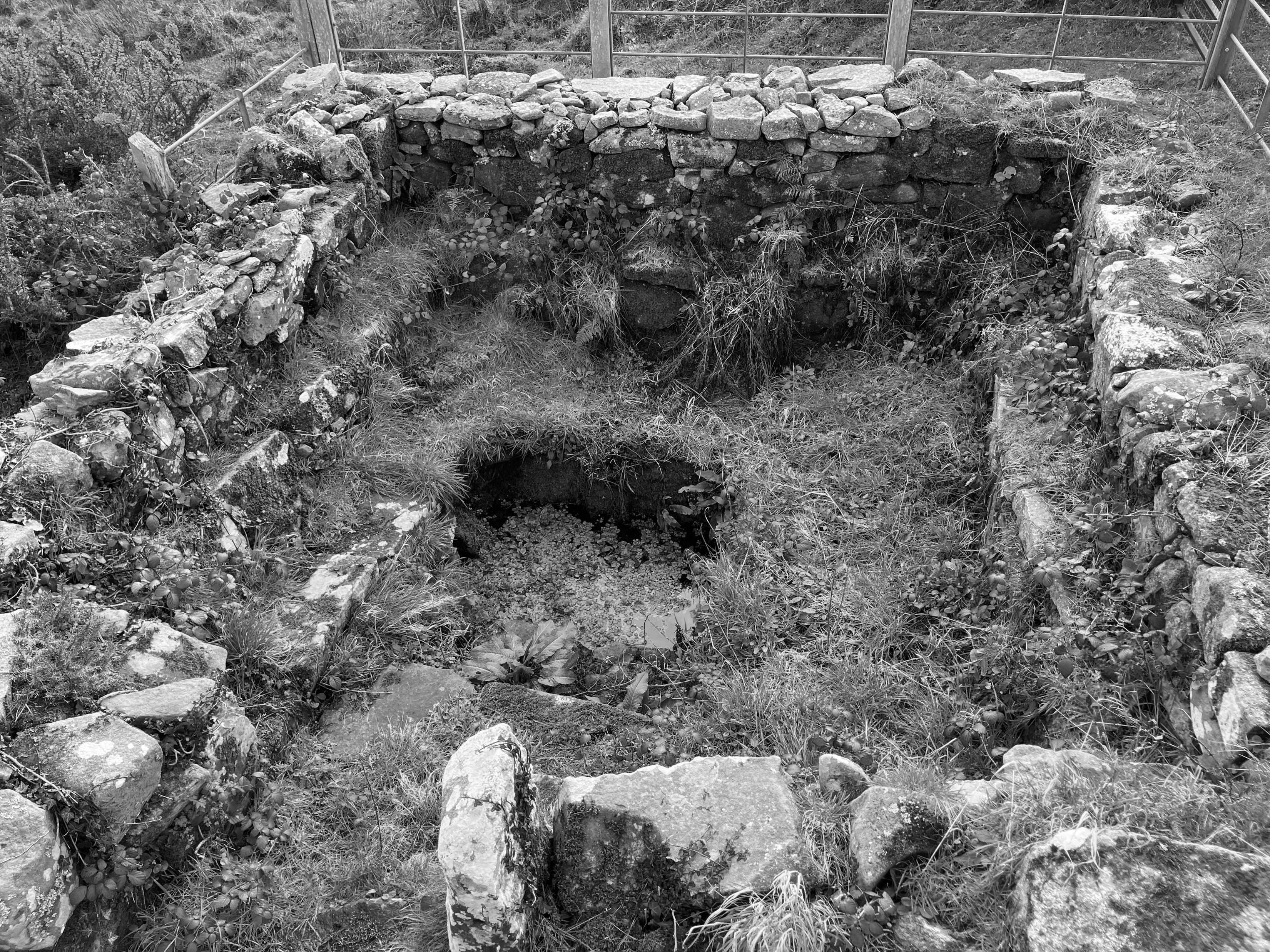
Heading into the next field revealed a path of sorts and following it to the right for a hundred yards, there was an odd accumulation of bushes, taller and protruding out more than the rest of the hedgerow field boundary, through which I thought I could see glimpses of a fence. Our hopes were raised. Continuing further, the path seemed to have a righthand turning. And we had found it. A small slate sign, raised a foot or so from the ground, pointed to Fynnon Aelrhiw. We both let out an involuntary laugh, realising we must now face the anticlimax that had tacitly been at the heart of this trip all along. We went through the gate – someone had tamed the brambles since the visit of the wellhopper.wales, whose account Christie had read online. It was neatly enclosed in a 15-by-15-foot square of three-bar metal fencing. Some money had clearly been spent, much to our surprise, and there was water – mottled on its surface with bright green duckweed. We would have to go in, to the extent that the size allowed. At most, one could stand shin-deep, although neither of us would have wished for much more. Christie went first, wincing at the cold (it really was inexplicably cold), and then I was left standing in it over a minute while Christie insisted on taking photos – a process I sensed he was deliberately prolonging. We sat for twenty-or-so minutes afterwards. It was about a day and a half since our journey had begun. And I think, in a sense, we felt almost a lack of anticlimax – the well was in good repair, far exceeding our expectations of a dried-up ruin. Christie pointed out a lump of white quartz placed on the stone wall around the well; I had mentioned on the walk my having read that besides pins and rags, the offering of quartz and white stones was also recorded. I suggested we walk around three times, in adherence to what I imagined was a custom for pilgrims in the Middle Ages. Our encounter with Fynnon Aelrhiw was complete.
We opted for a more direct route in our return: follow the roads. It had taken over four hours of walking to reach here, and by now even I was feeling somewhat hungry (although I stubbornly refused to admit this to Christie who had been lamenting aloud our failure to pack lunch). Christie pointed out the empty holiday homes as we passed – big and hollow as he described them. Having longer to observe the single-track roads, he remarked also at the odd attempts to cut the gorse into boxy hedges flanking us on both sides. My feet were still cold from the well as we got to about an hour outside of Aberdaron. We were stopped by a group of rooks, huffing and coughing in conversation, and as we watched, a murmuration of starlings took flight from the next field – more impressive than the one we had seen briefly on our way to Rhiw. Walking back, I mentioned to Christie how I had jokingly likened this trip in my mind to that of Severn accompanying Keats to Rome, attending to him in the grisly endgame of his Consumption – "he was in a most deplorable state" – in the hopes of an amelioration brought about by good air and the Climate, although Keats himself was sanguine: "I think there is a core of disease in me not easy to pull out." (He had asked Brown to accompany him instead but wrote of still awaiting a reply as he prepared to leave – by contrast, I doubted Christie had bothered asking anyone else to do this.) The journey was too much for Keats – he should never have left England by the doctor's reckoning. Doctors Clark and Luby had opened the corpse with help from an Italian surgeon and thought it "the worst possible Consumption". The lungs were entirely destroyed. Severn wrote angrily of the Italians and "their monstrous business": all the furniture had been burned, the walls scraped, and they were making new windows, doors, and flooring. Considering the reason for our own present curative misadventure, I wondered if a similar course of action would be prudent at Gwesty Tŷ Newydd following our departure. We arrived at the hill descending into the village as the sun began to set.
Changed out of our sodden shoes and socks, the next priority was food. Pleasant as dinner at Gwesty (as we'd taken to calling it) had been the previous night, it was hardly cheap, and the menu choices were limited. We drove into Abersoch, which features prominently in Peter Greenaway's The Falls as a centre of the never-explained violent unknown event, believed by some to be of an ornithological nature. I recognised some parts of the town from the film as we arrived, although it had also changed markedly. This would clearly be intolerable during summer. I managed to park directly outside the fish and chip shop, and we ate taking shelter from the wind under a partially covered bench near the harbour.
We went for a walk along the concrete promenade at Traeth Porthot on our return to Aberdaron, hearing but not seeing the sea. I said how, relaxed as I always am by seaside villages, I could never see myself living in one, except maybe at my end. "And off he went with a copy of Miscellany Two in his back pocket and a stomach full of barbiturates", Christie replied. The lights were on in Saint Hywyn's this evening, making our wandering feel less clandestine than the previous night. The pile of second-hand books had changed: the biography of Dietrich Bonhoeffer was still there unclaimed along with a smattering of Christian-adjacent self-help books, although now Anarchism Is Not Enough (University of California, 2001) by Laura Riding had somehow found its way here along with less surprising copies of The Eucharist of Early Christians (W. Rordorf et al., trans. M.J. O'Connell, Pueblo Publishing, 1978), Letters from Wales (ed. Joan Abse, Poetry Wales, 2000), and a smattering of Christian magazines. I grabbed a few bits and bought a copy of Selected Poems by R.S. Thomas using the honesty box payment system. Back in the room, we shared a Bara Brith between us, bought before leaving Abersoch. In bed, I went back to Jones to do some reading on Saint Winifred's in Holywell, to which I had suggested we pay a visit on our way out of Wales the following day.
IV
Major Francis Jones – he insisted on being addressed as Major by some accounts – was not quite the meek and humble scholar we had hoped. Searching for him online, the only pictures I could find were of Jones (second from the left below) in his role as Wales Herald of Arms Extraordinary – a position that had been dormant since the fourteenth century before its revival in 1963, and which he had held until his death in 1993.
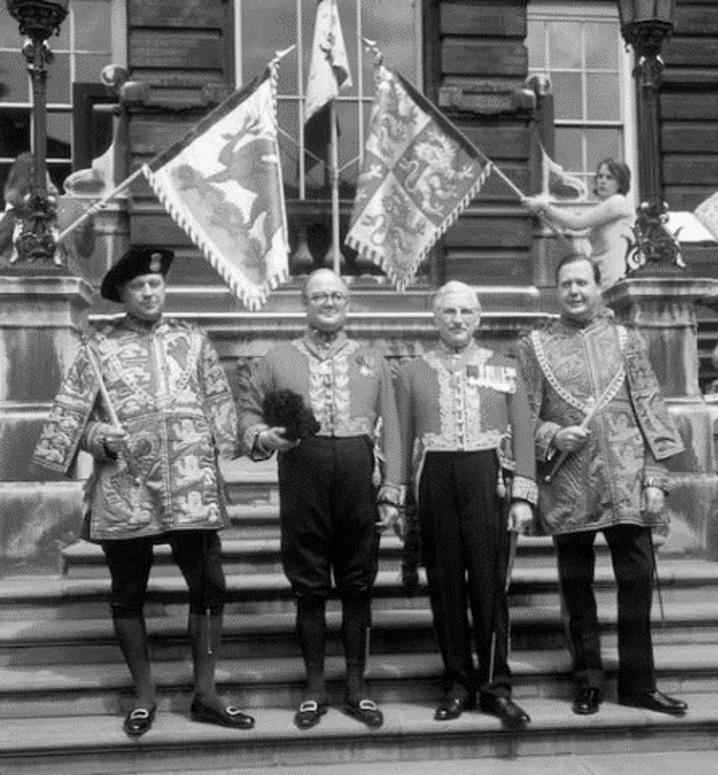
Despite the misgivings seeing these images had aroused, it appeared he was indeed an author of some repute, who published prolifically over his lifetime. Reading his An Approach to Welsh Genealogy – a 165-page paper delivered, it seems, in full as an address to the Honourable Society of Cymmrodorion in London on Wednesday 10th December 1948 – I found a display of erudition that did not carry the haughty didacticism I had expected to encounter. He opens describing how in the latter half of the eighteenth-century English tourists discovered Wales, taking it upon themselves to begin diffusing useful information among, and about, the Welsh – for which a society was established in the early nineteenth century (see Evelyn Waugh's Dr. Fagan for a satirical exemplar of this impulse). Jones contrasts the forms Genealogy assumed in the Welsh and English contexts: the English obsession for precise tracing of agnates tied to dates of birth, marriage, and death accurately set down, compared against the approach taken in Wales which derived much from preservation of the maternal line. He points out that examples used as a stick against Welsh Genealogy – e.g. the tracing of lineage back to Adam the Son of God – are invariably tropes recurrent throughout the broader European tradition when genealogists "take leave of reason". Genealogy is, he claims, of unique salience to the study of Welsh history when considered alongside the circumstances that produced it, and the discipline "should not be allowed to remain the harmless plaything of dilettante squires, parish antiquaries, and maiden aunts" – some haughtiness then. However, the history of Welsh tenure made the elucidation of contextual circumstances a more complicated endeavour than in the Anglo-Norman case, he adds, citing the consolidation of estates in the early portion of the seventeenth century which had diminished the smaller Welsh freeholder and precipitated the rise of a militant Nonconformity. The period 1450 to 1600 was The Golden Age he claims, subdivided either side of the Acts of Union: the first period being based on the native language nursed by religious houses and bardic culture, with the second half seeing increased assertion of English influence and a reorientation of genealogical thought. The paper continues for over a hundred more pages which I haven't found the time to read.
Loomis, in his review of The Holy Wells of Wales, had highlighted a key issue with the Jones's chosen structure – something I found for myself reading in Aberdaron that evening. The full account of Saint Winifred's – the Welsh Holy Well – had become scattered in fragments throughout the book. The entry in the book's rear merely referred readers to pp. 38-39, 49-50, 59, 62, 62, 64-66, 70, 72, 77, 82, 101, 113 in order to assemble a complete reading. The well exemplifies what had most intrigued me in the trip. The acceptance of wells into a broader scheme of Christian worship was something entirely absent in my encounters with standing stones or other sites of similar age and topographic situation in Britain – potentially the less inscrutable nature of a well's putative purpose, coupled with the pre-existing role of water in Christian texts and worship, made appropriation easier.
The initial missionary policy in Britain had inadvertently begun this process of appropriation, with Pope Gregory ordering the pagan idols be destroyed while the temples housing them be kept and "purified with Holy Water" for conversion to the worship of God. This continuity of site allowed room for manoeuvre, with the later Council of Tours in 567 seeing it necessary to explicitly forbid the worship of fountains. But exceptions were no doubt found – with the clergy eager to throw up walls of canon between religion and superstition, only for them to be revealed as elastic membranes when suitably tested. Officially, worship of wells was a superstitious attempt to achieve effects without natural causes by an operation which had not been approved by the Church – not that this appears to have stopped it being widely incorporated into Welsh Christian practices. By 1102, Archbishop Anselm had compromised and declared from Canterbury that no reverence or sanctity should be attributed to a dead body or fountain without the bishop's authority.
The Normans, having invaded and settled in South Wales in the eleventh century, disdained the local practices and unknown saints, ultimately attempting to place the country under the corrective control of Canterbury. Welsh princes appealed directly to Pope Innocent III to intervene: "the Archbishop of Canterbury, as matter of course, sends us English bishops, ignorant of the manners and language our land, who cannot preach the word of God to the people, nor receive their confessions but through interpreters." The resistance soon moved beyond letters. Llywelyn, Prince of Gwynned, managed to reclaim land to the North from a distracted King John (before then marrying the King's illegitimate daughter Joan). Innocent III would later excommunicate John and order Phillip II of France to wage war, who now formed an allyship with Llywelyn. But this impetus would soon be lost with John's concessions to Phillip at the Truce of Chinon in 1214 – a prelude to Magna Carta.
Three generations of Llywleyns would attempt to break the hold of English power, until The Last Prince – Llywelyn ap Gruffydd – was killed in battle along with hopes of a Welsh state free from English control and influence. Relationships between English clergy and the Welsh remained no less hostile. Archbishop Peckham wrote to Edward I, during the latter's attempt to finalise the annexation, describing the Welsh as "a lost people without profit to the world". He attributed their "loody and other customs" to their living distant from one another. "And if you wish to reform them, Sire, to be of benefit to God and the world and prevent bloodshed, command that they live together in towns."
Further cycles of uprising and suppression would occur, as Wales became incrementally folded into the Church of England. But it was a precarious state of affairs, particularly so in the years after the Reformation. Protestants naturally viewed ecclesiastical magic with avowed hostility, insisting the wells must be explicable as medicinal springs working by natural means. Their project of excising wells from worship would remain incomplete, however, and Richard Brown's Church and State in Modern Britain 1700-1850 (Routledge, 1991) describes an eighteenth-century Church which was perennially under-resourced and lacking clergy in Wales. The wells survived while the bishops busied themselves with attempts to balance the books and prevent the loss of more Welsh clergymen to England in search of better pay – one obvious solution would have been to stop their widespread reticence to appoint Welsh-speakers to Welsh-speaking parishes. R.S. Thomas epitomised the uneasy and clumsy compromise that Wales is left with today: the Anglican priest born in Cardiff who'd learnt Welsh and become a proud nationalist during his years at Aberdaron.
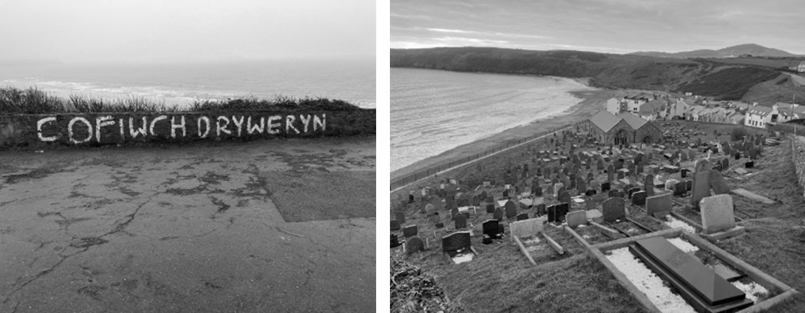
The insistence upon natural effects with natural causes links with a phenomenon Jones described of attempts to scientifically explain the supposed healing powers of wells, enabled by the advent of chemical analysis in the eighteenth century. Dr William Bird Herapath conducted analyses of many wells at the middle of nineteenth century, taking samples to his Bristol laboratory and finding overall a high sulphur content. Despite these rationalising efforts, the longstanding belief in the efficacy of wells remained strong in Welsh Christian worship.
Outside of the Church, there was also an unofficial melding of well-worship with Christianity, seen in the practice of laying and lifting curses. Into the nineteenth century, those carrying a grudge could curse the target of their ire at a cost of up to five shillings; the accursed would have to pay fifteen shillings for the curse to be lifted. To lay a curse at Fynnon Elian, the name of the victim would be written in a book (record keeping was key for managing payments) and their initials scratched on a slate (or written on parchment then folded in lead to which a slate was attached) and dropped in the well, often with corks attached to mark the location. A pin was then dropped in the well or placed through the name in the book, followed by the reading of few Biblical passages by the proprietor of the cursing well (presumably at their choosing) while the applicant listened. The applicant then drank partially from a cup of water taken from the well, with the rest thrown over their head – a process which was repeated three times as the applicant uttered the form they wished the curse to take. The water could also be taken away for use against enemies; one farmer in Breconshire was recorded as having taken two barrels. To lift the curse (dad-offrwm), the victim (or their representative) would visit the cottage of the well guardian and read the Psalms, or listen to them being read, followed by three circumambulations of the well and Bible readings. There was then, presumably, the exchange of money (although Jones does not mention this) and the slate was taken from the well and handed to the accursed supplicant who, to complete the process and defeat the curse, would return home and read considerable portions of the Book of Job and Psalms on three consecutive Fridays alongside drinking from a bottle of water from the well. Sometimes too the slate was ground to dust, mixed with salt, and thrown on the fire. Jones recounts that this practice of cursing had led to the common retaliation of "putting him in the well" for a "woman scorned or deceived". In one instance, a Nonconformist minister had believed himself to be cursed, taken to his bed, and become seriously ill – there was no evidence of his ever having been put in the well.
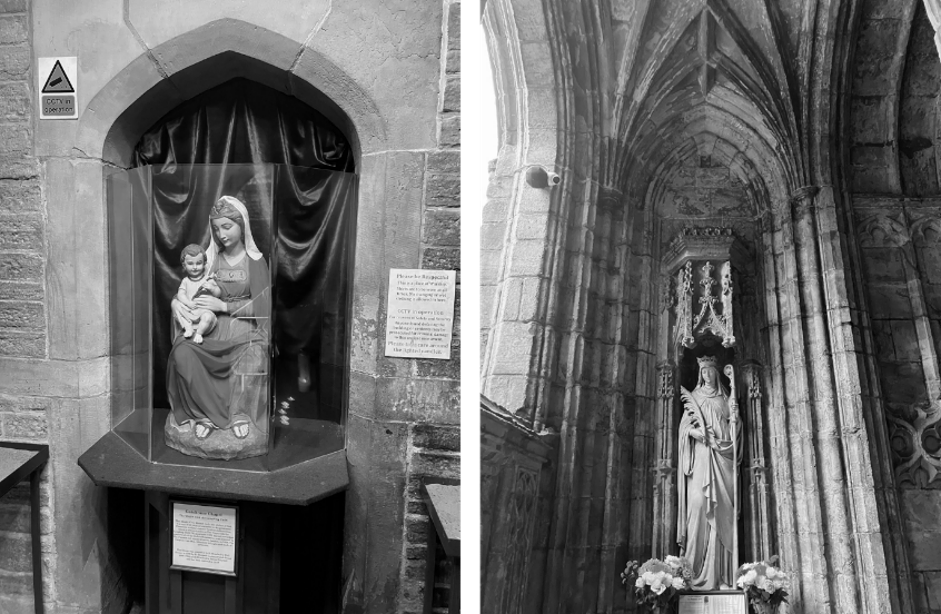
In the broader tradition of well worship in Wales, it is Saint Winifred's that has been held in the highest prestige – no opportunistic curse rackets here. Unlike the clumsy accommodation with other wells, Saint Winifred's assumed a vital role within the English Church. To thank her for assistance at Agincourt, Henry V is reported by Adam of Usk as having travelled "on foot in pilgrimage from Shrewsbury to Saint Winefride's Well in North Wales", and a popular myth has it that Edward IV placed soil from the site on his crown. And it was Lady Margaret Beaufort, mother of Henry VII, who was the primary benefactor for the erection of the Perpendicular Gothic chapel that stands over Saint Winifred's today, complete with Tudor emblems. The well had been under the protection of Cistercian monks at Basingwerk until the monastery's dissolution in 1537, but still survived the Reformation with its power seemingly undiminished. Indeed, Keith Thomas, in his seminal Religion and the Decline of Magic (1971, Penguin), describes the case of a man found dead at the well in 1630, having made scoffing remarks about its supposed healing powers; a local jury brought a verdict of death by divine judgement.
The closest English analogue I can think of is Our Lady of Walsingham in Norfolk, to which Henry VIII had walked bare foot for two miles in the years before the Reformation. The site had first gained significance when, after a series of Marian Apparitions, the Noblewoman Richeldis de Faverches had set about building a replica of the house in which the Annunciation had occurred. England's Nazareth fared much worse than Saint Winifred's during the Reformation, with many of the priory buildings razed and the Marian statue removed from the shrine (before potentially being destroyed at Lambeth). The fourteenth-century Slipper chapel, at which Henry VIII would have left his shoes before walking into Walsingham, became a stable.
High-Church Anglicans would prove to be Walsingham's saviour, and now Our Holy Lady of Walsingham exists as a shrine and pilgrimage site within the Church of England, complete with a Holy Well housed within the complex built in 1938 near the Abbey. The Slipper Chapel was brought back into use as a shrine for Catholics. I'd first seen video of the pilgrimage procession to Walsingham in A Passion for Churches – A Celebration of the C. of E. in which Betjeman cited it as evidence of the Church of England's unfailing capacity for tolerance and adaptability. I'm not so sure.

V
On my walk the previous morning, I saw a sign pointing up the hill towards Ffynnon Saint and had mentioned to Christie I might walk there the following morning before breakfast. It was further than expected, but the rain held off, and I reached a well-preserved slate sign near a clearing in the trees at a corner in the road. Ffynnon Saint comprised a small wall of stones around what looked a primitive manhole covered in leaves. Lifting the heavy lid, I could see that the stagnant water was suprisingly clear.
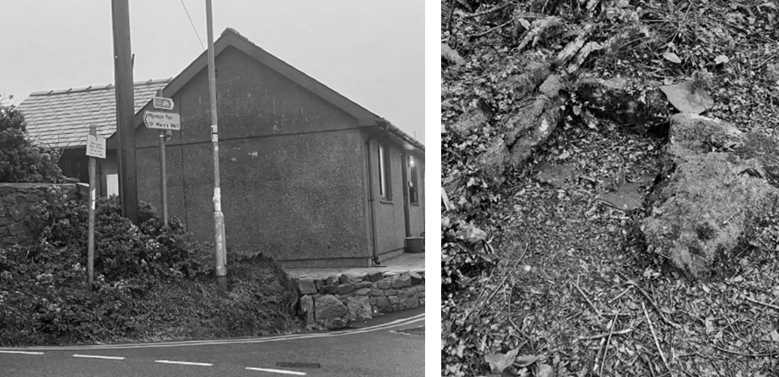
I told Christie of this at breakfast, while he added more tallies on the ordering sheet. (He wanted more egg and sausage after feeling short-changed the day before.) Looking at my photographs of Ffynnon Saint, he seemed glad to have stayed in bed. We checked out and loaded the car to head to Ffynnon Ddyfnog, setting a time of no later than one o'clock to leave Wales, knowing in practice this would probably be more like two.
Driving to Denbigh, Christie wondered aloud whether he ought to have undertaken his field work somewhere like here instead of West Penwith, sharing as it does many of the same features as Newlyn, but without the historic personal connection to the area that he had brought to his work in Cornwall, which I sensed has proved in equal parts advantageous and frustrating. Turning off a roundabout near Llanrhaeadr, we saw there were two houses at its centre – a shared driveway formed an exit pointing inwards – presumably this marks an obstinate compulsory purchase refusal I thought. (Christie has since directed me towards a Daily Mail article about the husband and wife who have lived on the roundabout for 40 years: "'I've lived in a bungalow in the middle of a traffic circle for the last 40 years – and the only way you'll get me out of here is in a coffin', says English man who loves his home" – of course he's English). In Llanrhaeadr, there was a pub opposite the Church, with Jewson bags piled up with wholesale boxes of crisps and vegetable oil against the windows and a faded Bass poster – "The Drink of The Empire" – hung at the door. I parked up and Christie went in to ask if we could leave the car for a bit, on the proviso that we came in later to buy a drink. A gravelled path ran through the woods, with a fast-flowing stream running alongside, taking us to Dyfnog's Well, which it turned out was feeding the stream.
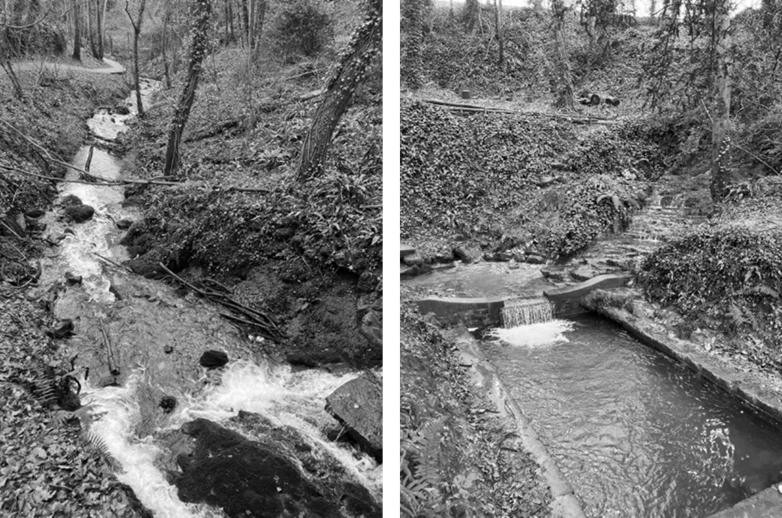
This was impressive. We had brought The Holy Wells of Wales with us, deciding this was probably the only time it might get close to any of the sites it described. We had left it in the hotel room during the previous day's trip for fear of a fine from the library if the book got damaged. Christie gave Jones's opus a small mock blessing in the well, taking care to minimise any water damage, before contemplating whether to get in. A young child came up the path, followed by her father and grandmother. They seemed to have been here before, and walked up the sloping path that wraps around the well to the origin of the waterfall into the stone basin. Probably wise to wait until they left before getting in, Christie thought, so we meandered awkwardly for a while in the vicinity. They left after a quarter of an hour, and Christie decided to go for a full submersion. The changing facilities for bathers had indeed long since vanished, so I was left keeping a lookout while he tried drying off with a jumper and getting changed. It was coming up to midday.
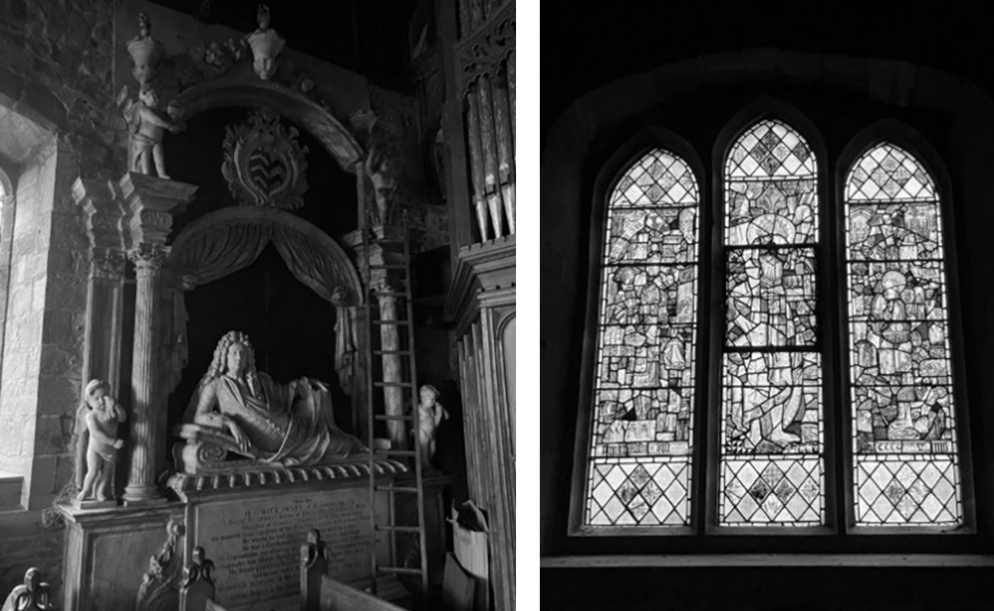
The Buildings of Wales by Edward Hubbard (Yale University Press, 2003) comments disparagingly on the Victorian restorations to the church – "inappropriate" – although by my reckoning the bizarre interventions had begun some time sooner with the baroque monument to Maurice Jones in a rear corner: clearly a man of leisure, and most diverting in conversation if the engraved epigraph is to be believed. The sixteenth century Tree of Jesse window is the Church's main attraction, with a few chairs set up before it. The vivid blue and red stand in stark contrast to the clear windowpanes to its right, although we were each drawn instead to the lovingly re-assembled window at the rear which had become a proto-Cubist melee of limb fragments.
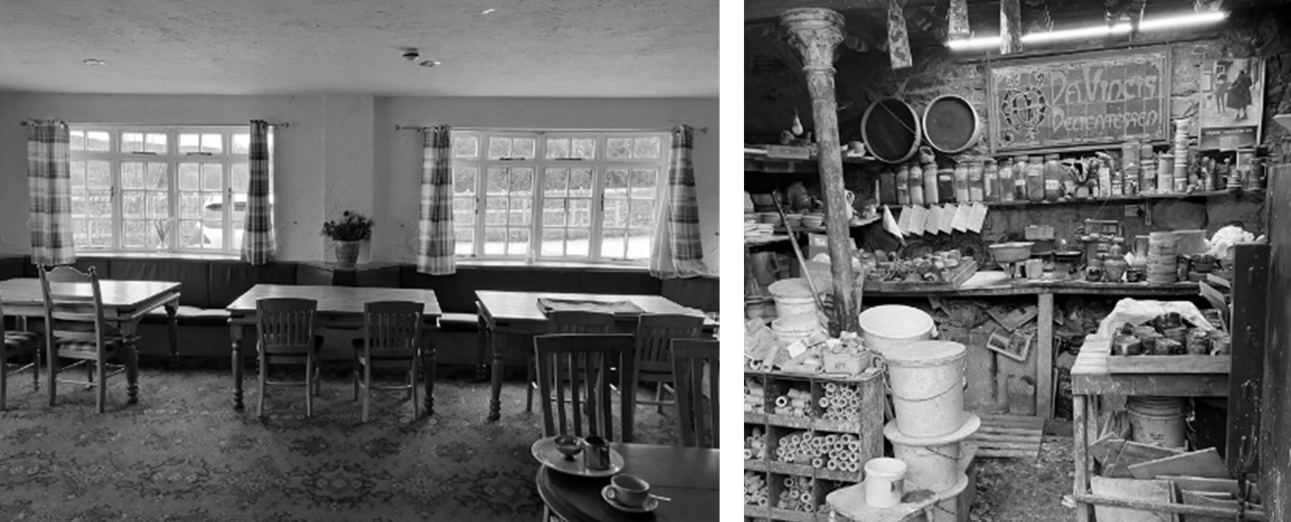
Opposite the lychgate is a pottery workshop beneath a sagging slate roof. The large wooden door was open, allowing us to browse the wares amidst the smell of a wood-fired kiln. Christie knocked at the door to the next room before opening it, finding nobody. I rang the number on the door but heard the phone ringing inside. We'd go to the pub for the promised drink and ask in there. The barman said Allan was probably away for lunch, but we could knock on his door as he lived in the house just up the road. We played a low-quality game of pool on the slightly-too-small and very-much-too-slick table before heading back to try again, finding the door to his house ajar when I knocked and received a shout beckoning us in. We walked the twenty or so yards over to Anvil Pottery and I pulled out two handfuls of items. The price list seemed old, unadjusted for inflation, and payment was either cash or bank transfer. Christie had his eye on a jug depicting some rabbits, although it had already sold. A Dutchman entered not long after us, looking to make a purchase and was slightly perplexed at the friendly but cryptic response: "I accept BACS". I explained this as meaning bank transfer and helped to generate an IBAN from the account number and sort code I'd been given, while Christie spoke further with Allan and deliberated further on what to buy. Unbeknownst to me, Christie's great uncle was a Leach potter – Allan had avidly followed a contemporary of Hamada in Japan, the name of whom I can no longer recall, and was also a particular fan of Michael Cardew. The Dutchman ended up buying a full dinner set, and Christie was still undecided. It was now half past two, and I tried hurrying him along. He bought a different jug with some mugs and received a potter's discount on account of his great uncle.
It was about quarter past three (just before closing time) when we reached St. Winifred's, which was situated next to the A5026, with a mid-rise block of flats built fifty or so yards behind, looming over the well owing to sloping hill. With experience of the inexhaustible Catholic appetite for kitsch, I knew what to expect as we entered the purple brick visitor centre and gift shop next to a Caribbean style bar at the roadside. Christie covered the £1 entrance fee, and we walked past the bottles for collecting water and cheap ornaments. Metal events barriers had been placed around the open-air portion of the well, although there was a gap for the steps and laminated signs zip-tied to the fencing said bathing was allowed, but only in accordance with a modesty policy. This would not be a repeat of Saint Dyfnog's; Christie was now going commando having swum in his pants previously – he would certainly fall foul of the modesty policy here. There was a push-tap for dispensing water and we each had a drink before heading out, stopping for five minutes in the sparse museum exhibition. It described the history of this Lourdes of Wales, with retellings of Winifred's legend – the virgin who was decapitated by her would-be suitor when she refused his advances, but whose head was reattached by Bueno, with a spring appearing where her head had fallen – alongside scans of the plans for the chapel (outlining the difficulties of its construction set into the hill) and photos of prior pilgrimages to St Winifred's. It was the wrong side of half-past three when we got back in the car; I clung to the false hope we might be out of Wales by four.
The rain started as we reached Chester at half-five, having stopped briefly for petrol. So removed was I from the routine of driving, I couldn't tell if the price I'd paid was extortionate. The tubular bridges in Stoke had been empty on our journey up but were now teeming with hordes of football spectators leaving the Bet365 Stadium after Coventry's 0-1 win away from home. On leaving Stoke, Christie commented that the land around here felt elastic. And he was right: ten-mile periods somehow stretched out and dilated interminably before us. I was very tired.
I was keen to stop in Burton-upon-Trent to see the remaining brewing infrastructure on the back of re-watching an old Jonathan Meades documentary a few months prior. I had thought we might also grab some dinner here. It was dark by the time we arrived, and it was difficult to discern much in the dim orange glow of the streetlamps. The navigation was taking us into the centre of a housing estate. I parked up and got out for some air and to finish the rest of the Bara Brith we'd taken in the car, taking shelter from heavy rain at a bus stop. Christie took a piss down a nearby drain. A few minutes later, I was driving the twenty-minute stretch to Derby for dinner, convinced I probably hadn't seen the best of Burton on this rainy winter night and making a note to return another time.
I missed two turnings, and it was nearer to an hour later that I'd parked up off a side street in Derby. Having only walked a few darkened streets through the drizzle, and seeing how quiet the city centre looked for a Saturday night, I grumbled to Christie that the trajectory of our journeys together seemed to chart a succession of once great places brought low. He was concerned at the fatigue I was exuding, and asked if we should book a hotel, but I really wanted to get home. I felt better for having eaten and was keen to get back on the road. I'd been told I could return the hire car at the forecourt, which was supposed to shut at ten, and it was now just after 8 – this would be tight.
We agreed to set aside our eschewal of motorways and take the M1. I asked Christie to put on Into Submission, feeling the need for the galloping percussion and pointillist melodies of early-noughties Ruskin. He sought assurances this wouldn't make me drive like a dickhead. The rain got much heavier, and I simply occupied the lane behind a lorry for 60 or so miles, trying not to pay attention to the time. We didn't talk much, but on nearing our exit junction Christie mentioned the navigation was predicting an arrival at 21:55. I turned off and took the final two roundabouts, relieved I'd be able to hand-off the Polo free of any damage. It was 21:54 as I approached the hire centre. The petrol price signage was turned off and upon pulling in I saw the forecourt shutters were down. I parked up and walked in the rain in search of activity inside or a dropbox – I also needed the loo but found these locked too.
I drove morosely into town and down the one-way residential streets, convinced this was when I'd scrape the bodywork against a bollard, before parking up on the driveway to Christie's house and stumbling inside. He seemed buoyant, whereas I was almost mute with exhaustion. I drank a tea in near silence, half-listening to a conversation Christie was having with his housemate about the new treatment he was due to be starting the following morning, now all the necessary medications had arrived. (During a rare moment of mobile signal near the church at Rhiw the previous day, Christie had arranged over the phone for a friend to collect his prescription from the local pharmacist such that it was waiting for him on our return – this all seemed to undermine our having travelled for so long to these sodding wells, but I kept this opinion to myself.) The treatment required: 1) twice weekly washing of all clothing, sheets, and towels at 60°C, 2) a full permethrin spray of the entire household, 3) a 24-hour full-body coating with malathion cream once a week for a month, and 4) six 3 mg tablets of Ivermectin taken in one dose, repeated a fortnight later. It sounded abominable. I grabbed my boots and rucksack from the boot of the car parked on the driveway and trudged the fifteen minutes home.
I woke up early the next morning, walked back to the Polo and drove it back to the hire centre before catching the bus home. The trip seemed even more absurd in retrospect than it had in planning. The friends I told in the days after my return were either amused or perplexed. And I was left in the awkward position of feeling the need to caveat the tale with an insistence that neither of us really believed in divine healing powers stored within the wells, whilst at the same time conceding that we had indeed undertaken this bizarre curative pilgrimage at considerable expense. A week later, I broke my elbow in a bicycle crash, bringing about the desultory convalescence in which I finished writing this. Christie, meanwhile, was cured – whether his strict treatment regimen had finally proved successful, or it was the result of our visit to the wells, we cannot be sure.
Epilogue
Some months later, I attended the National Pilgrimage at Walsingham with Rosa, who was visiting over the bank holiday (with car). I had read of the National Pilgrimage occurring each year around Whitsun and suggested we attend, beginning first with the revived Catholic shrine at Slipper Chapel (now designated a Minor Basilica by the Vatican) before heading into the town to intercept the Anglican procession to the ruinous Abbey.
The drive through Norfolk passed enjoyably – the only delay of twenty-or-so minutes spent stuck in trundling traffic down a country road beside one of the Broads – and we arrived at the Catholic National Shrine to Our Lady of Walsingham (England's Nazareth) not long past midday. The vast majority of the couple hundred pilgrims onsite seemed to be Goan Catholics, with numerous families having picnics around their cars in the spillover car park on the grass across from the handsome flint exterior of the Slipper Chapel. We wandered onsite, passing breezily through the entrance foyer while I made a flippant comment about The Problem of England, before turning the corner and stepping into the silent chapel.
The late nineteenth and early twentieth century redevelopment(s) of the building's interior have precious little to commend them. The new and re-blessed statue of Mary, Lady of Walsingham stood off to one side atop a plinth beneath an elongated blue and red cone, with an unimpressive reredos behind the altar. An elderly woman sat off to my left writing hurriedly on small scraps of paper; a mother and young child knelt quietly before the altar; and a married couple were each on one knee holding hands at the centre of the room. I briefly tried to feign a mildly reverential interest before exiting through the newly installed timber doors at the rear, sidestepping as I did a woman who had taken to kneeling on the paving slabs outside. The chapel was not particularly busy so as to demand such an overflow arrangement, although her decision seemed understandable; the quiet intensity of the interior scene – an assemblage of individual yet fundamentally shared displays of devotion – had taken us both aback, and made our presence feel intrusive. Rosa had (probably correctly) darted out almost as soon as we had entered.
Sat on the wooden benches erected for conducting open-air mass in front of what looked to be an industrial farmhouse – I have since learned it's called the Barn Chapel with relics of Saints Laurence, Beckett and More sealed in the altar – we shared some scones and jam I'd packed while attempting to assimilate our various thoughts. Clearly, England's Nazareth is decidedly English. After eating, I had a quick wander around the outdoor signage:
King Richard III dedicated England to Our Lady after the Peasants' Revolt at Smithfield in on 15th June 1381, by making the following proclamation throughout the land: "Dos tua pia haec ese, quare leges, Maria" – This is Your Dowry, O Pious Virgin Mary. England therefore belongs in a special way to the Blessed Virgin, who is the country's protectress and who, through her intercession, acts as the country's defender and guardian.
I learned that the new statue of Mary had been made in Bavaria and taken to Wembley to meet John Paul II in 1982. There were numerous other signs mapping the timeline of Marian shrines in England – the first had been at Evesham. We called in at the red brick gift shop before leaving, buying a few postcards. Much of the merchandise I recognised from Saint Winifred's.
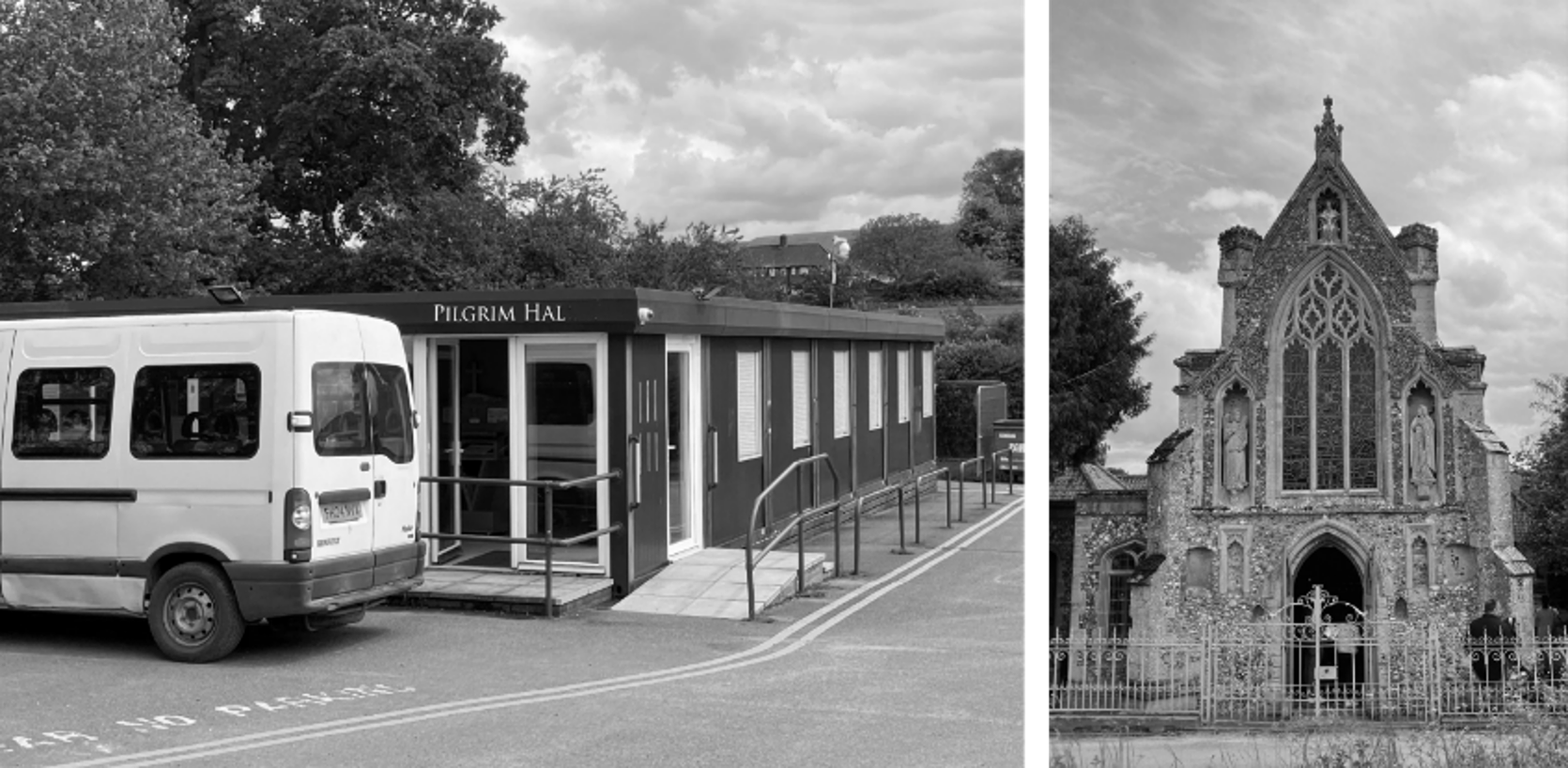
The National Anglican Pilgrimage in Walsingham itself was next. We set off to walk the mile or so (with our shoes) but soon realised it was unlikely we would make it into the village and back before the car park shut at five, so opted to drive. I also wasn't sure of the Pilgrimage timings in the village and was keen to ensure we didn't miss the procession of the Icon.
Arriving at Walsingham and searching for a car park, we encountered one of the more curious legacies of Dr Beeching's cuts at the former railway station in Walsingham – now an Orthodox church and Icon Museum. We could hear amplified music emanating from down the hill as we stepped out of the car and headed into the former station, catching a strong odour of incense. The building has been prettily converted, and I saw they had a collection of second-hand books for sale: The Collected Poems of John Betjeman (of course), The Early Church in Eastern England (M. Gallyon, Terrence Dalton, 1973), and nestled in among a collection of military histories I found a pamphlet entitled A History of Saint Winifrede's at Holywell containing a written history, photographs, and a selection of small postcards depicting drawings of the chapel and well.
The music grew louder as we walked down the sloped back street into the village – it was a version of Ave Maria. A series of homes had their doors open, revealing inside what appeared to be a series of subsidiary shrines. This was like something I'd seen in southern Italy.
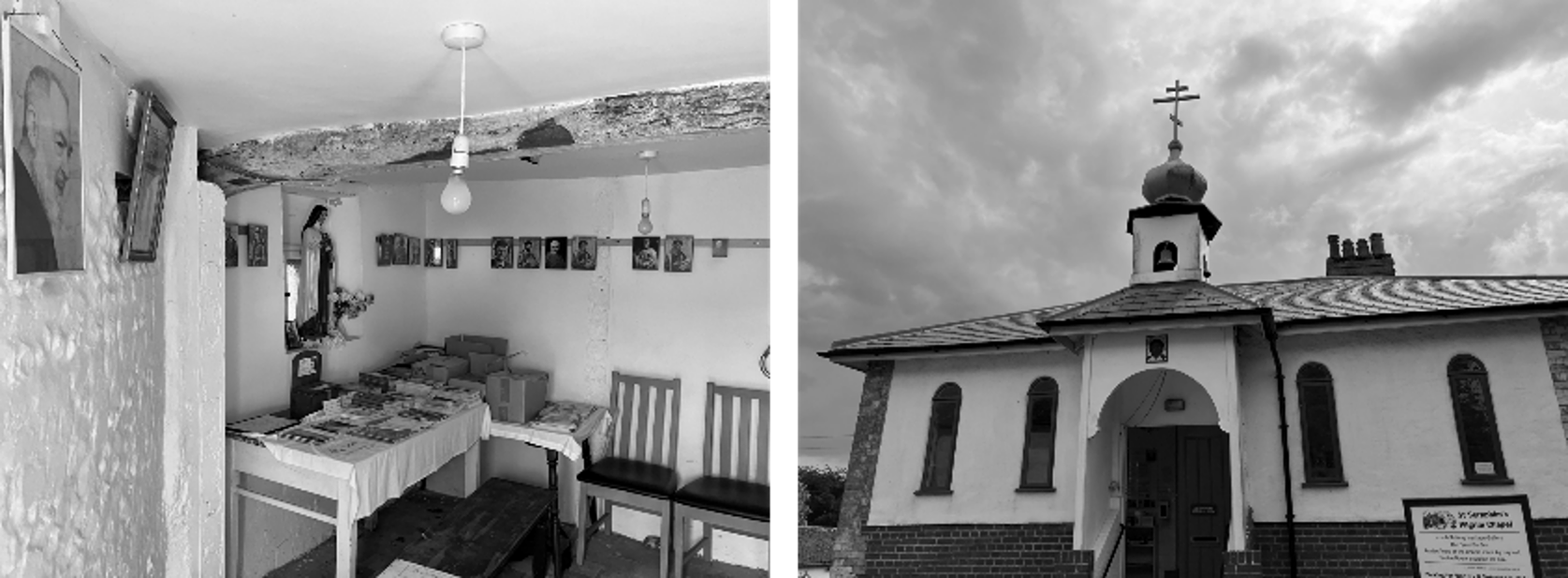
We arrived at the High Street just as the procession was making its way through the Abbey gates. A succession of vicars, men dressed in habits, and members of the public were filing along. They were all singing, and very pointedly raising the order of service booklet aloft at the chorus of Ave, Ave, Ave Maria. We soon saw who they were directing this at: a small cluster of protestors had gathered behind some construction barriers holding banners denouncing the Pilgrimage as blasphemous. One particularly fervent objector, an elderly Presbyterian man, shouted repeatedly at the processing pilgrims that they must obey the word of God. We skirted round to join the tail end of the procession into the Abbey grounds.
The shingled path forked in two at a row of trees; we followed around to the right and emerged onto the grassland before the ruinous arch of the Abbey. It was crowded. Many people seemed to have brought picnics, with vicars distributing wine and snacks to those in their congregations who had also travelled. We sat on the grass near a gazebo under which the choir was stood, and behind a roped-off section for gathered clergy sat on plastic garden chairs. (The Orthodox Priests in attendance remained standing, however.) The Marian Icon stood off to the side of the stage. The music died down and the service began. We had each been somewhat charmed by the quaintness of this all, but the frequent mentioning of wombs being "defiled" etc. soon brought us back around. They had wrapped things up in about thirty minutes, after which the Icon was processed through the crowd and towards the Anglican shrine. According to the programme, the remainder of the day was split between a Real Ale festival and solemn vespers.
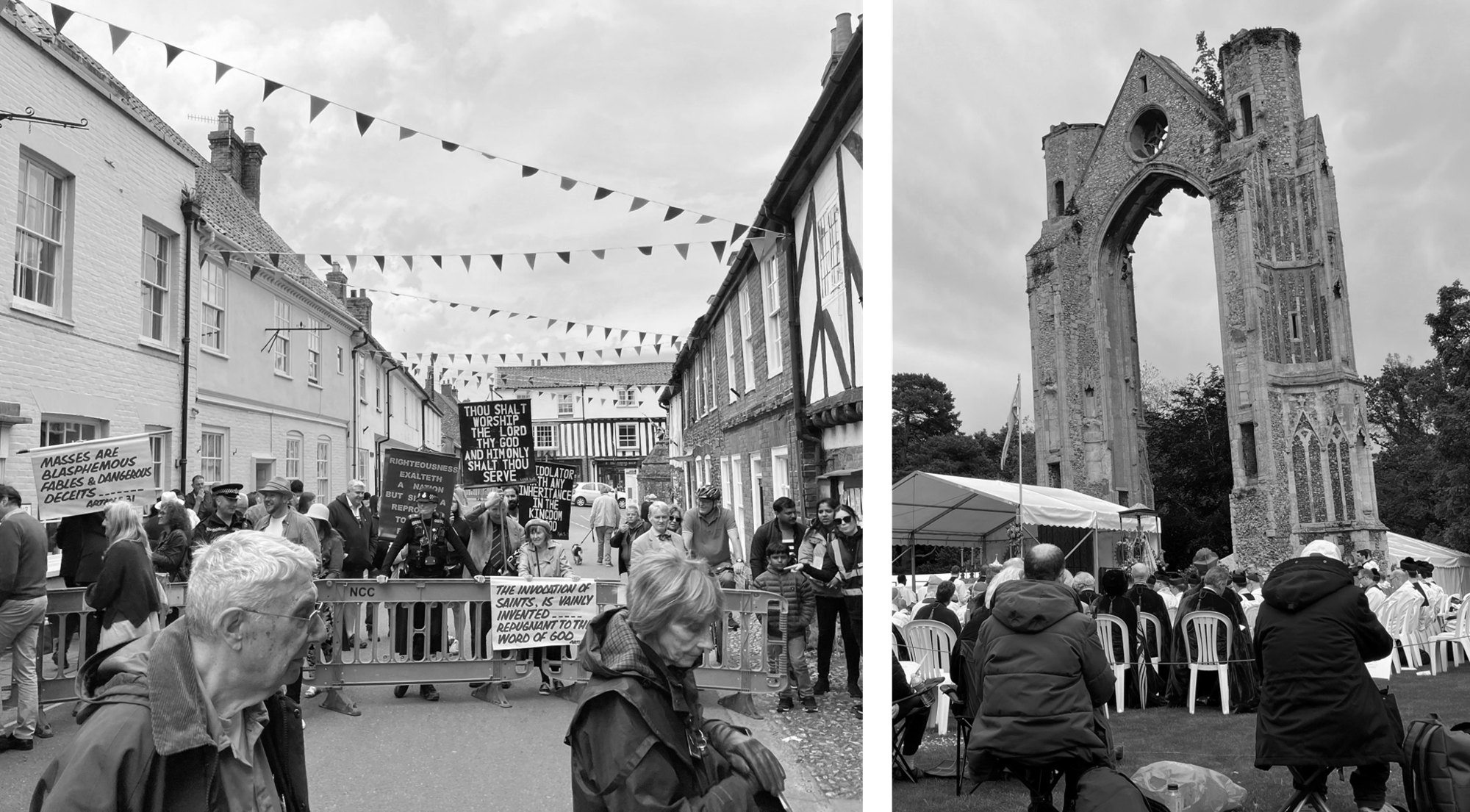
Heading out of the Abbey and down the high street, I was tickled to see a cluster of vicars with cigarettes and pints in a pub garden within ten minutes of the service's end. We made an obligatory stop at the guest shop, in which I heard some attendees reflecting on the earlier protests: "well, at least there was no Bible throwing this year". Back at the car, we saw some of the protestors boarding a coach back to Birmingham alongside a group of pilgrims.